AWO
Internal preview
To ‘have’ running water
you must let go of it
and let it run.

Alan Watts, The Wisdom of Insecurity, 1951

A brand built around the man, not around the symbols. The portrait wall comes first. Mark Watts's archive, the Sausalito recordings, Druid Heights, Thornecrest. The British scholar who picked up a brush in San Francisco is one thread among many, not the whole rope.

Direction · The Way of Water
Scroll · ↓
Origin · The Big Bang as Ink Splat

The Big Bang as ink splat

If you took a bottle of ink and threw it against a wall, it would splat, and ink went everywhere, and then the universe comes out.
Alan Watts, recounted by Mark Watts, 2026-06-04

The opening of the experience inherits this image. The splat resolves into letters. Letters into pages. The ink is sumi black with warm undertone; where it runs thin it turns blue, not gray, the way Alan's brush actually worked.

Reference, named: the Boulder logo-in-ink animation Mark commissioned years ago. A brush enters frame, paints the AWO mark, withdraws, the form remains. The universal brush. We are designing toward that pattern.

The Mark · Canonical AWO Identity

The mark

Five marks the Alan Watts Organization already owns. They sit in the archive as sacred artifacts. The redesign treats them as inheritance, not raw material to recombine.

Alan Watts Organization display logo
01 · Canonical wordmark

The Alan Watts Organization

The lockup that has carried the brand since Mark formalized the archive. Treated as the canonical mark, the one a new system has to make peace with before it earns the right to extend.

02 · Institutional seal

Library & Archive seal

Used on letterhead, certificates of authenticity, internal correspondence. The institutional register the brand can fall back on when the warmth needs to give way to permanence.

AWO Library and Archive seal
Alan Watts calligraphy, used as signature lockup
03 · Signature lockup

Alan's own hand

Calligraphy drawn by Watts himself. The personal-warmth register, used where the brand needs to feel like a letter signed at the bottom rather than a logo on top.

04 · Personal chop

Sengai chop, 1956

Alan's India-ink personal chop after Sengai, struck in 1956. A reserved mark, used the way a wax seal sits on a letter. Decorative restraint over decorative volume.

Alan Watts personal India-ink chop after Sengai, 1956
AWO seal reversed for dark backgrounds
05 · Dark-ground treatment

Reversed for dark grounds

How the marks behave on sumi. Books, vinyl jackets, video end-cards. The same identity, weighted for night-mode media instead of paper.

Thesis · The Way of Water (not method)

The Way of Water

Alan Watts was a British scholar who became a Sausalito broadcaster, a Druid Heights resident, a houseboat philosopher, and, late in life, a student of sumi-e under Hasegawa and Hodo Tobase. The brand has to carry all of those, not collapse him into the last one.

The Way of Water is the name for that balance. Watts the man, Watts the voice, Watts the archive. The page is washi paper, the display face is a calligrapher's hand because Mark called the first round's type janky, the body is a Western humanist text family with true italics drawn for screens. Color is sumi on bone, with the blue undertone real ink takes when it runs thin, Mt Tam green, gold pulled from sun-aged washi, and one reserved warm tone for sunset.

Motion is reserved. The hero breathes, nothing else fades in just because it can. Where a stroke moves, it moves like ink finding the next fiber on washi, not like a slide deck transition. The background sim is sumi-locked: dye absorbs, ink lingers, blue surfaces where it runs thin.

To try to control the mind forcefully is like trying to flatten out waves with a board, and can only result in more and more disturbance.
Alan Watts, Tao: The Watercourse Way, Pantheon, 1975

The art of life is more like navigation than warfare, for what is important is to understand the winds, the tides, the currents, the seasons, and the principles of growth and decay.
Alan Watts, Tao: The Watercourse Way, closing chapter, Pantheon, 1975

Typography · Hand & Page

Hand & Page

Display · 01

Yuji Syuku

Kinuta Font Factory, from the wrist of Yuji Kataoka. 2022.

Digitized from a living calligrapher's most formal brushwork. We use the Latin only; the brush authority is in the letterforms, not in pasted-on glyphs. This is the typeface that answered Mark's complaint that v1 felt designer-made.

fonts.google.com →
Watts
The Way of Zen
Alan Watts · 1957 · Pantheon
Body · 02

Spectral

Production Type, Paris & Shanghai. Commissioned by Google. 2017.

Drawn for serious long-form screen reading. True italics, small caps, seven weights. A complete editorial system without the 2024 trendy-italic baggage of Fraunces or Cormorant.

fonts.google.com →
Tao does nothing,
yet there is nothing left undone.
Watts and Al Chung-liang Huang's rendering of Tao Te Ching ch. 37, from Tao: The Watercourse Way, Pantheon, 1975. The body face has to sit underneath the brush without competing. Spectral does that work quietly.
Mono · 03

IBM Plex Mono

Mike Abbink & Bold Monday for IBM. 2017.

Metadata register. Picked over JetBrains Mono and Inconsolata because it carries editorial warmth rather than developer-marketing coldness. Reserved for timestamps, citations, navigation chrome, captions.

fonts.google.com →
EP·047 / 1965
Recorded at the Society for Comparative Philosophy
Sausalito, CA · 00:42:18
Lectures · Essays · Manuscripts · Letters · Field Recordings · Photographs · Mediascape
Accent · 04

Klee One

Fontworks, Tokyo.

Pencil rather than brush. Japanese-engineered quiet rather than Caveat-loud. Used for pull quotes, margin notes, signatures. Moments where the hand should be visible but the formality drops.

fonts.google.com →
bite your own teeth
a margin note, The Book, Pantheon 1966
For the moments the brand needs to feel like a hand in the margin, not a chop on the page.
Palette · Sumi Tam Washi

Sumi · Tam · Washi

Mt Tam landscape, green and gold
Anchor image · from the AWO archive

Mt Tam Green and Gold

The greens and golds in this palette are sampled directly from this landscape image in the AWO archive (Mark Watts). The chips below are not invented; they are pulled from the mountain Watts walked.

Sumi Ink

#0A1428
Pine soot and animal glue, ground on a stone. The blue-black Mark named: not pure black, has warmth at the edge and blue at the core.

Ink Thin

#1A2848
Sumi ink dilutes blue, not gray, the way Alan's brush actually worked. The brush running out, surfaced as a color.

Mt Tam Green

#2D3E2A
The deep forest of Mt Tamalpais, the mountain Watts walked from Druid Heights.

Sage, Aged

#6B7D5E
Coastal scrub silvered by Marin fog. A mid-tone bridge for type and rules.

Washi Cream

#F4EAD4
Handmade kozo paper. The page itself, never quite white.

Aged Gold

#B8954B
Washi paper sun-aged. Used only on chapter rules and pulled accents.

Sunset Warmth

#C97B4A
Warm-tone reservation, Mark 2026-06-04. Used sparingly to break the cool dominance. Marin sunset over the Pacific, off Mt Tam.

Vermillion

#A3331A
Held in reserve. Used once, where a wax seal would sit on a letter. Never as decoration, never as CTA color.

Marin Fog

#C5C0B8
The neutral grey of a morning before the fog burns off. UI surface, not background.

Pacific Teal

#4A6B66
The water seen from the houseboat in Sausalito. Held in reserve for media.
Archive · The Watts Mediascape

The Mediascape

The brand's visual rail is biographical, not iconographic. Portraits across the life: London at 21, Sausalito at 51, Mill Valley at 60. Locations: Thornecrest, the houseboat, the library desk. Diagrams in Watts's own hand. Period letterhead. The artifacts Mark Watts kept, used as the brand's primary visual register.

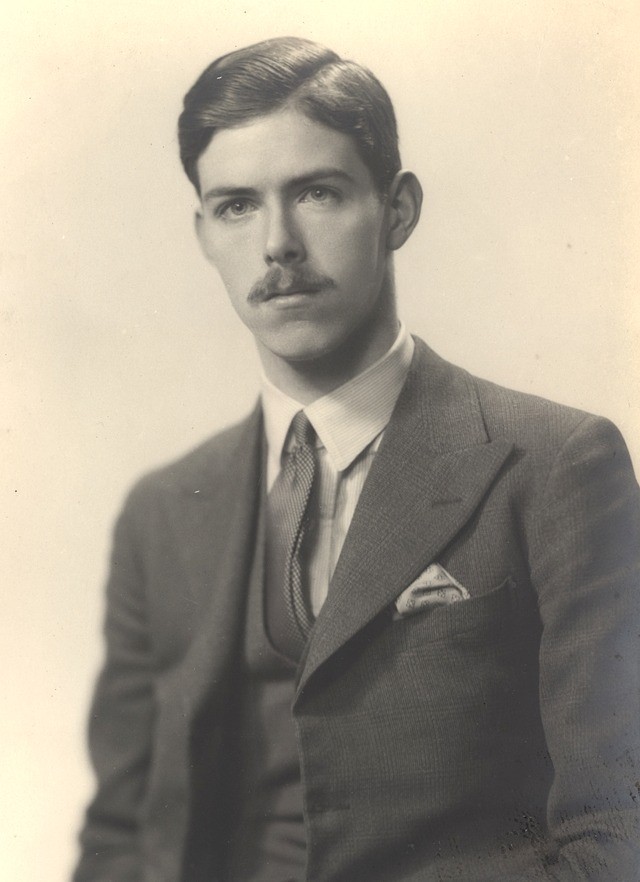
Alan Watts at 21, 1936
Watts at twenty-one 1936

The earliest sharp portrait in the archive. Grounds the timeline. The boy who would write The Spirit of Zen at twenty before the move to America.

AWO Archive · Mark Watts

Alan Watts, contemplative, 1964
Contemplative, 1964 1964

Editorial-ready. The strongest single hero portrait in the stack. Full eye contact, mid-life, the broadcaster at the peak of his voice.

AWO Archive · Mark Watts

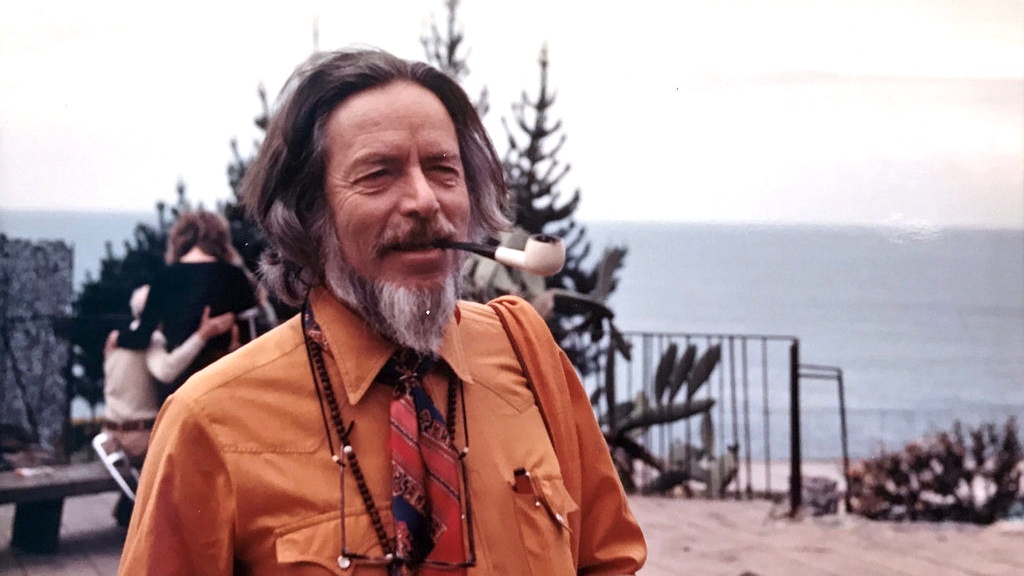
Alan Watts with pipe, Sausalito 1958
Pipe, Sausalito 1958

KPFA-era contemplative pose. Society for Comparative Philosophy, the early Mediascape recordings begin here.

AWO Archive · Mark Watts

Alan Watts, late period, 1972
Blue shirt, profile 1972

Late-period Alan. A year before the Mt Tam houseboat fire and the death that ended the recording archive. The face the lectures finally caught up with.

AWO Archive · Mark Watts

Alan Watts at the Vallejo ferryboat, reflected in water
Vallejo, reflected undated

The Vallejo ferryboat, Watts's houseboat home. The man and his vessel, doubled in the water that carried both. A literal Way-of-Water image.

AWO Archive · Mark Watts

Alan Watts at his desk, Mill Valley Library, 1973
At the desk 1973

Mill Valley Library, the working Alan. Manuscripts, books, the apparatus of a writing life. The brand needs the workspace, not only the lecturer.

AWO Archive · Mark Watts

Mark Watts and Alan Watts, 1969
Mark and Alan 1969

Father and son, 1969. The photograph Mark named directly in the May 31 conversation. Lineage as a real family relation, not a corporate "founder photo" pose.

AWO Archive · Mark Watts

Alan Watts Library Announcement, Spring 1973
Library Announcement, Spring 1973 1973

Period letterhead with Alan's own calligraphy in the masthead. The brand has held this print register since the lifetime of its subject; the redesign is recovering it, not inventing it.

AWO Archive · Mark Watts

Birchbark letter from Thornecrest, 1950
Birchbark letter, Thornecrest 1950

A letter Alan wrote on birchbark from Thornecrest. The physical artifact, kept. The brand inherits a register where bark and ink were correspondence-grade materials.

AWO Archive · Mark Watts

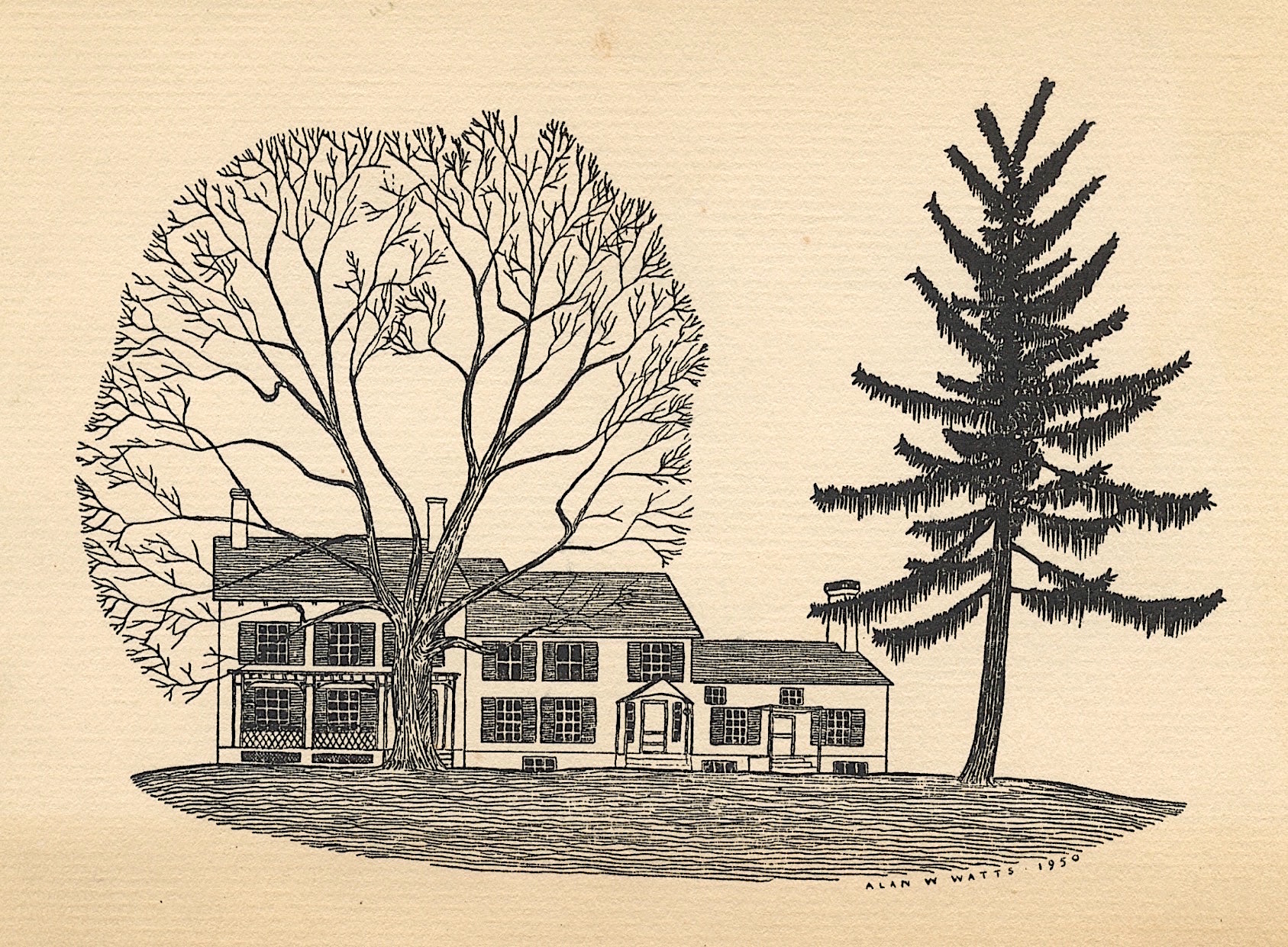
Thornecrest farmhouse, 1950
Thornecrest farmhouse 1950

The Millbrook, NY property. The brand needs landscape and shelter, not only faces.

AWO Archive · Mark Watts

Cycles of Intelligence diagram, Alan Watts manuscript
Cycles of Intelligence manuscript

Watts's own diagram. A drawing in his hand, not a brushwork tradition he borrowed. The anchor artifact for the “document” rail of the brand.

AWO Archive · Mark Watts

The Hasegawa lineage

Visible in the brand sensibility but not in its decoration. Alan and Saburo Hasegawa were friends in San Francisco in the 1950s; the ink register comes from there. Two artifacts, named in the open, used as ancestry rather than ornament.

Saburo Hasegawa, Screens and Mountain Water lithograph
Saburo Hasegawa, Screens and Mountain Water. Lithograph. The ink lineage that informs the brand sensibility.
Wandering Push, Hasegawa reference
Wandering Push, Hasegawa. Additional reference for the ink register.
Applications · In the World

In the World

Pantheon · Reissue, 2027

The Way
of Zen

Alan Watts

Book treatment, The Way of Zen reissue. Mt Tam green cloth, Yuji Syuku title, no decorative glyph on the front board. The title carries itself.

Alan Watts, 1958
Alan Watts
On Being Vague · 1959 · 00:42:18
Mediascape, EP-047 Sausalito, 1959

Talking-photo UI, Mediascape entry. Calligraphy name overlay. Play control is a quiet square, not a vermillion disc; the brand's one shout is saved for the wax seal.

Alan Watts Library Announcement masthead, Spring 1973, Alan's own hand
Druid Heights
Muir Woods, CA
alanwatts.org

Dear friend,

Thank you for writing about the 1965 Sausalito recordings. The session you describe, on being vague, was taped at the Society for Comparative Philosophy in February of that year. We are restoring the reel this season and will send a clean transfer when it is ready.

With warmth,

Mark Watts
2026, No. 048

Inheriting the masthead. Alan's hand, Spring 1973. The seal sits where the wax would. Vermillion appears here, once. Klee One signature.

Catalog Lineage · Five Brochures

The print lineage

The brand inherits from a lineage of mid-century printed matter. Five major brochures sit in the AWO archive as high-resolution scans, 142 to 324 MB each. Too large to embed in a moodboard; not too large to name as the inheritance the new print system carries forward.

  • Lectures and Seminars, Spring 1959brochure · AWO archive
  • California, 1962brochure · AWO archive
  • California Summer, 1964brochure · AWO archive
  • The Nature of AwakeningLos Angeles, mid-60s · AWO archive
  • Studies of Man Relationsbrochure · AWO archive

The lineage the print system inherits from. Five mid-century brochures in chronological order, all in the AWO archive as high-resolution scans, ready to inform the print system the redesign delivers.

You are an aperture
through which the universe
is looking at
and exploring itself.

Alan Watts, The Book: On the Taboo Against Knowing Who You Are, Pantheon, 1966